
ULTRA EARLY BIRD ENDS 30 NOV >>> Register Today & Save on Your Conference Pass >>>

EXHIBITORS 2027

Refitech Composite Solutions
Lightweight Composite Structures for eVTOL

A European engineering and manufacturing specialist focused on high-performance carbon-fibre and composite components, with capabilities directly relevant to the weight, structural efficiency and industrialisation challenges facing eVTOL aircraft developers.

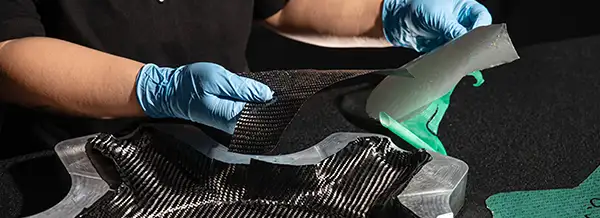
For eVTOL platforms, where every kilogram of structural mass affects payload, range and battery performance, Refitech develops and manufactures lightweight fuselage structures, structural panels, battery and avionics enclosures, propulsion-system housings, cabin components and ready-to-fit subassemblies. Its capabilities include carbon-fibre sandwich structures using foam and honeycomb cores, integrated inserts and attachment points, and complex 3D composite geometries.

Crucially for eVTOL programmes moving from demonstrator aircraft towards commercial production, Refitech supports the complete transition from engineering and prototyping through to repeatable series manufacture. Manufacturing capabilities include RTM, prepreg processing, hot-press and autoclave production, alongside CNC machining, bonding and final assembly. Early design-for-manufacture support helps optimise fibre orientation, laminate construction, material selection and component integration before designs become locked for production.

With manufacturing operations in the Netherlands and China, Refitech combines European engineering support with scalable production capacity. The company is ISO 9001:2015 certified and working towards AS9100, with an emphasis on process control, material traceability and quality documentation—making it particularly relevant to eVTOL OEMs building a certifiable, scalable composite supply chain.
JDA Systems
Embedded Computing & Control Electronics for eVTOL

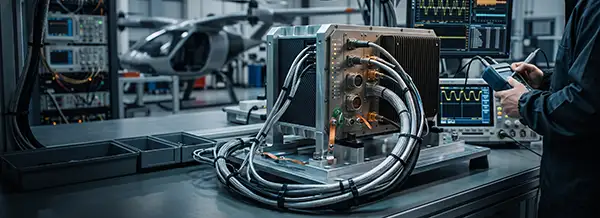
JDA Systems (Europe) GmbH provides embedded computing, electronic control and ruggedised hardware solutions applicable to the demanding avionics and vehicle-control architectures emerging across the eVTOL and Advanced Air Mobility sector.

For eVTOL aircraft developers, the challenge extends beyond achieving high computational performance: electronics must operate reliably within extremely tight size, weight and power (SWaP) constraints while tolerating vibration, temperature variation, electromagnetic interference and the safety requirements associated with flight-critical systems. JDA Systems' capabilities in embedded processing, custom electronics and system integration can support applications including vehicle management, flight-control interfaces, propulsion control, power-management systems, sensor processing, data acquisition and aircraft health monitoring.

Its engineering approach is particularly relevant as eVTOL architectures become increasingly software-defined and distributed, requiring processors, interfaces and electronic modules to communicate reliably across multiple aircraft systems while maintaining deterministic performance and system redundancy.

JDA Systems can support programmes from requirements definition and hardware architecture through development, integration, verification and production, enabling OEMs and Tier suppliers to develop electronics around the specific packaging, environmental and performance requirements of their aircraft.

For the eVTOL sector, this positions JDA Systems at an important engineering interface: translating increasingly complex aircraft software and control requirements into compact, robust and production-ready electronic hardware capable of supporting certifiable commercial aircraft platforms.
Farasis Energy Europe
High-Energy Battery Technology for eVTOL

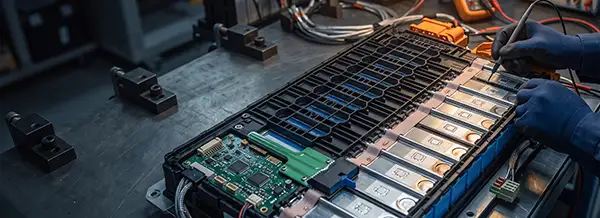
Developing high-energy-density lithium-ion battery technology specifically applicable to eVTOL, electric aircraft and regional air mobility, where the relationship between battery mass, peak power, safety and cycle life directly determines aircraft capability.
Farasis has supplied battery systems to eVTOL manufacturers since 2020 and says it now works with multiple leading eVTOL companies. Its aviation solutions combine lightweight pouch-cell architectures with high specific energy and high-power discharge capability for demanding phases such as vertical take-off and landing.

Particularly significant for eVTOL is Farasis' high-nickel NCM technology. The company reports 300–400 Wh/kg for its ultra-high-performance chemistry and cites a mass-produced eVTOL battery achieving 350 Wh/kg, more than 10,000 real-world eVTOL flight cycles, 8C high-power discharge for 60 seconds at 30% state of charge, and 15-minute fast charging.

Safety is equally central. Farasis' No Thermal Propagation technology is designed to contain a damaged-cell event and prevent propagation into neighbouring cells—critical to the certification and containment strategy of high-energy airborne battery systems.For European eVTOL OEMs, Farasis therefore addresses one of the industry's defining engineering challenges: delivering the specific energy required for useful payload and range while simultaneously providing the power, rapid turnaround, thermal safety and cycle life necessary for commercially viable electric flight.
Logo with the word EMOSYS in dark teal text on a white background. The letter E is stylised.
eMoSys
High-Power-Density Electric Propulsion for eVTOL

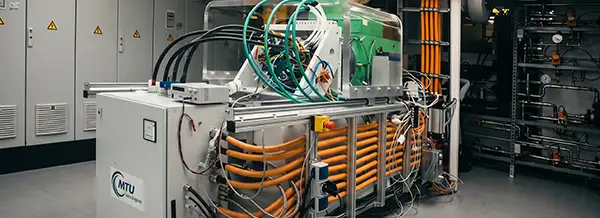
eMoSys develops high-performance electric motors, integrated power electronics and complete electric-drive solutions for aviation, with technology specifically targeted at eVTOL, UAV and electric aircraft propulsion. The German company is part of MTU Aero Engines, giving its propulsion development particular relevance to aerospace programmes progressing towards higher levels of maturity and certification.

For eVTOL aircraft, eMoSys focuses on one of the propulsion system's fundamental challenges: achieving very high power density without imposing an unacceptable weight penalty. Its multiphase motor architecture combines lightweight construction and high efficiency with additional electrical redundancy—particularly important for distributed electric propulsion and safety-critical VTOL applications.

The company also develops integrated inverters and motor-control electronics from 48V to 1,200V. Its 1,000V inverter is specified at under 2 kg, including housing, for a 250 kW machine, illustrating the potential for significant propulsion-system SWaP reduction as eVTOL architectures move towards higher-voltage electrical systems.

eMoSys supports development from motor concept, simulation and mechanical/electrical/software engineering through prototyping, testing and validation. Its facilities enable detailed investigation of thermal behaviour, vibration, rotor dynamics and efficiency under demanding operating conditions.

For eVTOL OEMs, this makes eMoSys particularly relevant to the challenge of creating lightweight, fault-tolerant and thermally robust electric propulsion systems capable of delivering both sustained cruise efficiency and the intense peak-power demands of vertical flight.
Teijin Carbon Europe
Advanced Carbon-Fibre Materials for Lightweight eVTOL Structures

A major European producer of high-performance carbon-fibre materials for aerospace structures, with technologies particularly relevant to eVTOL aircraft where structural mass directly affects payload, range, energy consumption and propulsion-system sizing. Teijin specifically identifies urban air vehicles among the future aerospace applications for its Tenax™ carbon-fibre technology.

For eVTOL OEMs, Teijin's Tenax™ portfolio spans carbon-fibre filament yarn, thermoset prepregs, thermoplastic composites and dry reinforcements. These materials can support lightweight primary and secondary structures including fuselage sections, wings, control surfaces, rotor/propulsion structures, interior structures and other highly loaded composite components.

Of particular importance as eVTOL manufacturers progress from prototypes towards higher-rate production is Teijin's work on rapid-cure materials, thermoplastic composites and dry-fibre processing. These technologies are aimed at reducing composite manufacturing cycle times and enabling more industrialised aerospace production—an important challenge for aircraft programmes ultimately targeting production volumes beyond those of traditional aerospace.

Teijin Carbon Europe also provides an established European aerospace supply base. Its Heinsberg facility manufactures Tenax™ carbon fibres, thermoplastics and dry reinforcements, with annual carbon-fibre capacity of approximately 5,100 tonnes, while its European aerospace operations are certified to EN 9100 / AS9100D-equivalent requirements.

Teijin addresses a fundamental aircraft-level equation: removing structural mass without compromising strength, durability or aerospace-grade manufacturing control—while developing composite processes capable of scaling towards commercial aircraft production.
PPG Industries
Aerospace Coatings, Transparencies & Materials for eVTOL Aircraft

PPG is a major global aerospace materials supplier whose technologies are highly relevant to eVTOL aircraft durability, lightweighting, passenger safety and high-rate manufacturing. Its aerospace portfolio spans coatings, transparencies, sealants, adhesives, engineered materials and packaging systems used across commercial, military and emerging aircraft platforms.

PPG's aerospace coatings can provide lightweight corrosion and environmental protection for composite and metallic structures while delivering the high-quality exterior finishes required for passenger aircraft. This becomes particularly important for eVTOLs expected to operate at high utilisation rates from exposed vertiports, where aircraft will experience repeated UV, rain, temperature and operational exposure.

PPG is also a significant manufacturer of aircraft transparencies, including windshields, windows and canopies. These capabilities are particularly relevant to eVTOL designs incorporating large, highly integrated cockpit and passenger glazing, where optical quality, impact resistance, weight and structural integration must be balanced.

Its aerospace portfolio additionally includes sealants and adhesives for fuel, pressure, aerodynamic and structural applications, alongside specialty materials supporting aircraft assembly and protection.

PPG tackles an often-underestimated industrialisation challenge: ensuring that lightweight next-generation aircraft are not only structurally efficient, but also protected, sealed, finished and manufactured to aerospace standards while remaining durable through intensive commercial operations.

White stylised letter E inside a white circle on a teal background.
Enpower Greentech
Ultra-High-Energy Batteries for eVTOL & Electric Aviation

A next-generation battery developer focused on lithium-metal, semi-solid and all-solid-state battery technologies. Its technology addresses perhaps the most fundamental constraint facing battery-electric aircraft: achieving substantially higher specific energy without sacrificing power capability, cycle life or safety.

For eVTOL applications, Enpower has developed pouch-cell platforms reaching up to 410 Wh/kg, while its lithium-metal development programme has demonstrated cells at 450 Wh/kg and above. The company has specifically developed larger-format 10–50 Ah lithium-metal cells for drones and electric aircraft/eVTOL applications.

That improvement in specific energy has major aircraft-level implications. Higher Wh/kg can translate into greater range and payload, reduced battery mass, or additional energy reserve without increasing maximum take-off weight—making battery chemistry directly relevant to overall eVTOL architecture.
Enpower is also developing all-solid-state batteries, demonstrating 300 Wh/kg technology using a lithium-metal anode.

Solid electrolytes potentially offer significant aviation advantages by reducing reliance on flammable liquid electrolytes and improving safety while simplifying thermal-management requirements.
Safety development is particularly relevant: Enpower has reported lithium-metal cells passing nail-penetration testing without combustion or explosion, alongside UN38.3 testing covering vibration, shock, thermal and other conditions.

Enpower is working directly on the industry's defining battery challenge: moving electric aviation beyond today's energy-density ceiling while balancing the competing requirements of weight, peak power, safety and commercial operating life.
Radiall SA
Lightweight, High-Reliability Interconnects for eVTOL Aircraft

Radiall is a global specialist in aerospace interconnect technology, developing connectors, high-speed data interfaces, RF components and fibre-optic solutions for demanding aircraft environments. Significantly, Radiall specifically identifies Urban Air Mobility and eVTOL as applications for its aerospace connectivity technologies.

For eVTOL OEMs, connectivity presents a major aircraft-level challenge. Distributed electric propulsion, batteries, power electronics, flight controls, sensors and increasingly software-defined avionics create hundreds of critical electrical connections—all of which must deliver reliability while minimising weight, packaging volume and installation complexity.

Radiall's aerospace portfolio includes EPX™ EN4644 multipin connectors, QuickFusio™, Quick Install, RF interconnects and ruggedised fibre-optic solutions supporting signal, power, high-speed data and aircraft EWIS architectures. Its Quick Install technology is particularly relevant to eVTOL, combining compact packaging with tool-less mating and a claimed 15% weight reduction compared with competing solutions. Radiall explicitly lists UAM/eVTOL among its target applications.

Weight reduction extends deeper into the portfolio. Radiall's lightweight EPXB2 offers a reported 21% saving versus its standard aluminium EPXB2, while lightweight airframe RF cables can deliver savings of up to 30%.

Radiall addresses a critical but easily overlooked scaling challenge: creating an aircraft-wide connectivity architecture that is lightweight, compact, vibration-resistant, maintainable and reliable enough for safety-critical commercial flight—without allowing the wiring and interconnect system to become a growing SWaP penalty as aircraft complexity increases.
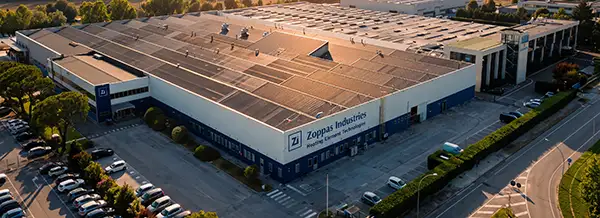
Zoppas Industries Heating Element Technologies
Advanced Thermal Management & Heating Systems for eVTOL

A specialist in electric heating elements and engineered thermal-management solutions, with technologies applicable to the increasingly complex thermal requirements of eVTOL and electric aircraft.

For eVTOL OEMs, thermal management is an aircraft-level challenge. High-voltage batteries, power electronics, electric motors, avionics and cabin systems must operate within controlled temperature ranges across dramatically different ambient conditions, while any heating hardware must add as little mass and electrical load as possible.

Zoppas Industries' capabilities include flexible heaters, cartridge and tubular heaters, etched-foil technologies, heating cables and customised integrated thermal solutions. Within an eVTOL architecture, these technologies can potentially support applications including battery conditioning and cold-weather pre-heating, electronics and sensor temperature control, anti-icing/de-icing systems, fluid and coolant heating, cabin thermal systems and component-level thermal protection.

The ability to engineer heating technology around a component's geometry is particularly relevant to aircraft packaging. Rather than treating heating as a separate subsystem, lightweight heating elements can be designed around the surface, enclosure, fluid circuit or structural component requiring temperature control, helping reduce packaging volume and unnecessary mass.

For eVTOL manufacturers, Zoppas therefore sits at an important intersection between thermal performance, energy efficiency and aircraft operability: enabling critical electrical and mechanical systems to remain within their required temperature envelope while minimising the weight, power consumption and packaging penalties associated with aircraft thermal management.
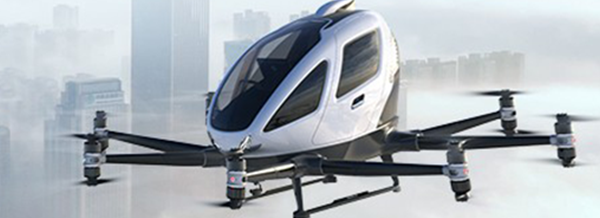
A white passenger drone with four arms and eight rotors flies above a city skyline in foggy weather.A bold, stylised lowercase e and c combined in white on a black circular background.
EHang
Autonomous eVTOL Aircraft & Commercial Urban Air Mobility

EHang is a global leader in autonomous eVTOL aircraft and Advanced Air Mobility, developing not only passenger aircraft but the command-and-control, operational and infrastructure ecosystem required to deploy pilotless air mobility at commercial scale.

At the centre of its portfolio is the EH216-S, a two-seat, battery-electric autonomous eVTOL designed for short-range passenger transportation. Rather than requiring an onboard pilot, the aircraft operates autonomously with oversight supported by EHang's command-and-control infrastructure—making the company particularly important to the industry's transition from piloted eVTOL operations towards increasingly autonomous commercial flight.

EHang has achieved a series of significant regulatory milestones in China. The EH216-S became the world's first passenger-carrying pilotless eVTOL to obtain a Type Certificate, Standard Airworthiness Certificate and Production Certificate from the Civil Aviation Administration of China. In 2025, operators using the EH216-S also received the first Air Operator Certificates permitting commercial passenger operations with pilotless human-carrying eVTOL aircraft.

For Europe, EHang's relevance extends beyond the aircraft itself. The company has participated in European UAM demonstration programmes, conducted flight demonstrations across multiple European markets and worked with airspace-management partners on integrating autonomous aircraft into future operating environments.

EHang therefore represents a particularly important eVTOL proposition: moving autonomous passenger flight beyond prototype demonstrations and into certified production and commercial operation—providing real-world evidence for how pilotless eVTOL networks could ultimately be deployed at scale.
© 2026 WeConference Group. All rights reserved.
Head Office: 167-169 Great Portland Street, 5th Floor, London, United Kingdom